Deeds, Trusts, and Paper Trails: A Systematic Guide to Tracing Asset Ownership Through Public Land Records
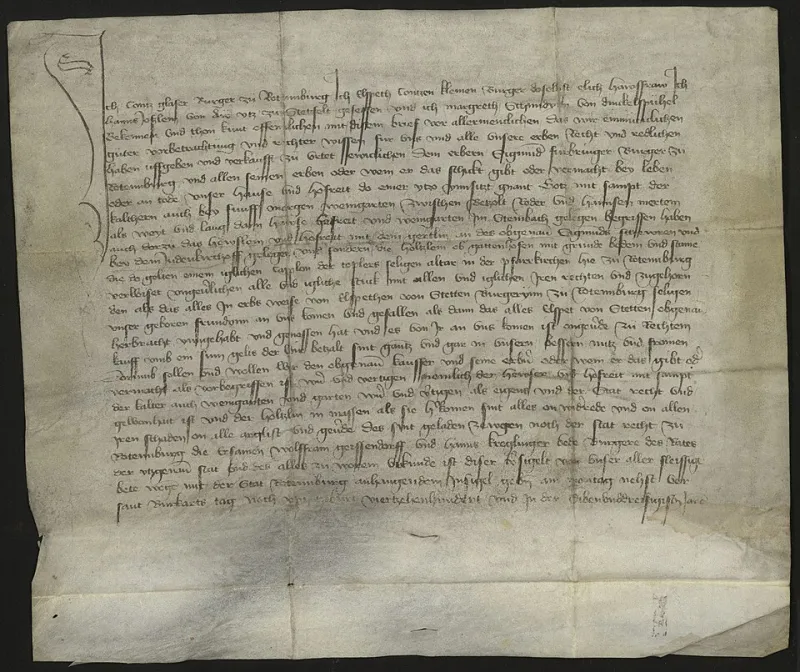
Photo: Unknown, Public domain, via Wikimedia Commons
Real property is among the most difficult assets to fully conceal. Unlike cash, cryptocurrency, or bearer instruments, land has a physical address, a tax parcel number, and a legal chain of title that jurisdictions are required by law to maintain and, in most cases, make publicly accessible. Yet despite this structural transparency, the majority of researchers—even experienced ones—treat county recorder portals as simple address-lookup tools rather than what they actually are: extraordinarily rich repositories of financial behavior, relationship networks, and ownership intelligence.
This guide is designed to close that gap. The methodology described here applies to journalists, compliance professionals, academic researchers, and due diligence analysts operating within the United States. Every data source referenced is either freely accessible or available through low-cost commercial platforms. No subpoenas, no court orders, and no confidential informants are required.
Why Real Estate Records Remain the Researcher's Most Underused Asset
The persistence of property records is their greatest analytical virtue. Unlike corporate filings—which can be dissolved, restated, or administratively purged—deed records are permanent. Once a transfer is recorded with a county recorder or register of deeds, that instrument becomes part of the chain of title and cannot be removed without a court order. This means that even transactions executed decades ago remain traceable today.
Furthermore, real estate transfers carry a documentary richness that most other public filings lack. A deed does not merely record who owns a property; it identifies the grantor and grantee, the consideration paid (or a nominal figure indicating a non-arm's-length transfer), the legal description of the property, the vesting language (how title is held), and often the name of the notary and the lender. Each of these data points is a potential thread to pull.
Building the Foundation: County Recorder and Assessor Data
Every research engagement involving real property should begin at two sources: the county recorder's office and the county assessor's office. These are distinct agencies with complementary but non-identical datasets.
The recorder maintains instruments: deeds, mortgages, liens, easements, lis pendens filings, and reconveyances. The assessor maintains valuation and ownership records tied to tax parcel numbers (APNs). Neither database alone tells the complete story, but together they provide the foundational layer from which all further analysis proceeds.
In most U.S. counties, these records are now accessible online. Platforms such as PropertyShark, NETR Online, and individual county portals provide varying levels of free access. For researchers conducting volume analysis, services like DataTree (from First American) or RealQuest offer more structured query capabilities, though at a cost. The starting point for any unfamiliar jurisdiction should be the NETR Online directory, which aggregates direct links to county-level recorder and assessor portals across all 50 states.
When initiating a search, anchor the inquiry to a specific parcel using the APN rather than the street address. Addresses can change; parcel numbers are permanent identifiers that remain consistent across ownership changes.
Reading Deed Instruments for Intelligence
A grant deed, warranty deed, or quitclaim deed is not merely a legal formality. For the trained researcher, each element carries analytical weight.
Grantee vesting language is particularly informative. When a property is transferred to "John Doe, Trustee of the Doe Family Trust dated January 15, 2019," the trust name and date become research handles. California, for example, does not require trusts to be recorded publicly, but the trustee's name and the trust's date are sufficient to pursue further inquiry through probate court records, UCC filings where the trust appears as a secured party, or litigation databases where the trust has been named as a plaintiff or defendant.
Nominal consideration is a reliable indicator of a non-arm's-length transfer. When a deed recites consideration of "$10.00 and other valuable consideration" rather than a fair-market price, it typically signals a transfer between related parties—family members, business associates, or entities under common control. These transfers are not inherently suspicious, but they are the structural mechanism through which assets are repositioned to obscure beneficial ownership, and they warrant closer examination in any investigation involving asset concealment.
Quitclaim deeds deserve special attention. Unlike warranty deeds, which convey title with guarantees, quitclaim deeds transfer only whatever interest the grantor currently holds—no more, no less. They are the instrument of choice for rapid title transfers between related parties because they require minimal documentation and can be prepared without a title company's involvement. A property that has been conveyed multiple times via quitclaim within a compressed timeframe is exhibiting a pattern consistent with layering—the real estate equivalent of money laundering's intermediate transaction phase.
Mapping Nominee Arrangements and Trust Structures
The most common mechanism for obscuring real property ownership in the United States is the revocable living trust. Because trusts are not required to be recorded in most states, a property held in trust appears in county records under the trustee's name only. The beneficial owner—the individual who controls and benefits from the property—may be entirely invisible to a surface-level search.
To penetrate this structure, researchers should pursue the following strategies:
Trustee cross-referencing: Search the trustee's name across all properties within the same county and adjacent counties. Professional trustees—particularly attorneys acting as trustees for multiple clients—will appear repeatedly. More revealing is when a private individual appears as trustee across multiple properties with different trust names, suggesting they are managing assets on behalf of a single beneficial owner across a deliberately fragmented structure.
Trust date correlation: When multiple properties are held in trusts with identical or near-identical formation dates, the probability of common beneficial ownership increases substantially. This pattern is particularly visible in jurisdictions where the trust name and date appear consistently in deed vesting language.
Mortgage document analysis: Even when a property is held in trust, a purchase-money mortgage will typically identify the borrower as an individual, because lenders require personal liability. Examining the deed of trust or mortgage instrument filed contemporaneously with the property transfer often reveals the beneficial owner's identity directly.
Identifying Suspicious Transaction Patterns
Beyond individual instrument analysis, researchers conducting broader investigations should look for transactional patterns across a portfolio of properties. The following sequences are diagnostically significant:
- Rapid serial transfers: A property that changes hands three or more times within 12 months, particularly at escalating prices between related entities, is exhibiting a pattern consistent with fraudulent property flipping schemes or value inflation for lending purposes.
- Cross-county transfer clustering: An individual or entity that transfers multiple properties across different counties within a narrow timeframe—particularly to newly formed LLCs or trusts—may be repositioning assets in anticipation of litigation, regulatory action, or bankruptcy.
- Lien release timing: The release of a mortgage lien shortly before a transfer to a related party, followed by the absence of a new mortgage on the receiving entity, suggests a cash transfer designed to move an unencumbered asset outside the reach of creditors.
Title Insurance Commitments as a Research Resource
Perhaps the most overlooked resource in real property research is the title insurance commitment. When a property is sold through a conventional transaction, the title company issues a commitment that summarizes the chain of title, identifies all recorded encumbrances, and discloses any matters affecting the property's title. While the commitment itself is not a public document, the recorded instruments it references—every deed, lien, easement, and judgment—are.
Some title companies publish their plant data (the internal title search databases they maintain) through commercial licensing arrangements. First American's DataTree and Fidelity National's PropertyPoint are two such platforms. These resources allow researchers to reconstruct the chain of title with a level of completeness and speed that manual county record searches cannot match.
Constructing the Ownership Map
The culmination of systematic land records research is an ownership map: a visual or tabular representation of every entity and individual connected to a subject property or portfolio, the instruments linking them, and the timeline of those connections. This map serves as both an analytical tool and a communication device, allowing researchers to present complex layered ownership structures in a form that is immediately legible to editors, attorneys, compliance officers, or investigators.
The construction of such a map is iterative. Each instrument examined will surface new names, entities, and dates that must themselves be queried. The process continues until the researcher reaches either a confirmed beneficial owner or a jurisdictional dead end—such as a Wyoming LLC whose members are undisclosed and whose registered agent is a commercial service with no further traceable connections.
Public land records will not answer every question. But for researchers willing to engage with them rigorously, they answer far more than most people realize—and they do so entirely in the open.