Unmasking the Invisible Owner: A Researcher's Systematic Guide to Piercing Shell Company Veils
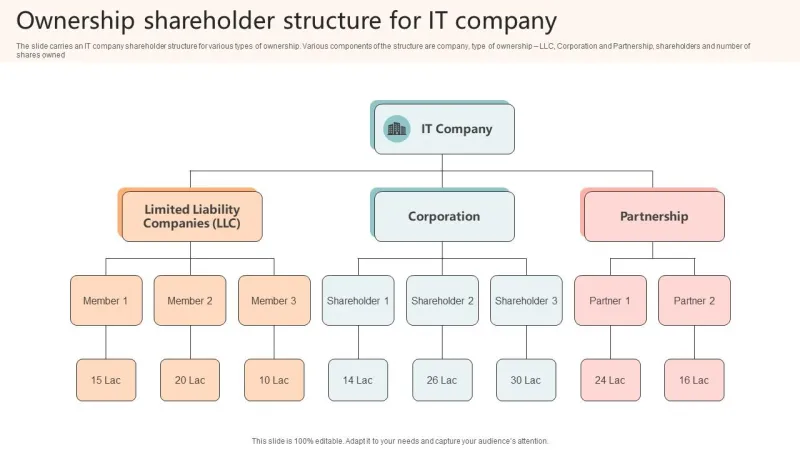
Photo: corporate ownership structure diagram business research legal documents, via www.slideteam.net
In the landscape of investigative research, few puzzles are as deliberately engineered to resist scrutiny as the modern shell company network. A single operating business may sit beneath a cascade of holding entities spanning Delaware, Wyoming, the Cayman Islands, and the British Virgin Islands—each layer adding distance between a researcher's query and the human being who actually controls the asset. Yet that distance is rarely absolute. Public records, when aggregated with discipline and cross-referenced with precision, consistently reveal fractures in even the most elaborate corporate genealogies.
This article outlines the practical methodology researchers can employ to trace beneficial ownership legally and systematically, drawing on the full spectrum of available data sources most practitioners underutilize.
Why Shell Structures Exist—and Why They Break Down
Not every complex corporate structure signals wrongdoing. Legitimate tax planning, liability segregation, and multi-jurisdictional investment vehicles routinely produce layered ownership arrangements. The investigative challenge is not to assume malice but to establish fact. The structural complexity that serves legitimate purposes also creates an evidentiary record—articles of incorporation, registered agent filings, UCC financing statements, and securities disclosures each leave traces that, in isolation, appear meaningless. Aggregated across jurisdictions and time, they tell a coherent story.
The critical insight for any researcher approaching a shell network is this: obfuscation requires maintenance. Every time an entity opens a bank account, secures a loan, files a lawsuit, registers a vehicle, or enters a regulated industry, it generates a public or semi-public record. The strategy is to identify which transactions that entity could not avoid and then find the records those transactions produced.
Starting at the Foundation: State Incorporation Databases
The first investigative layer is the state-level Secretary of State database. While Delaware and Wyoming are notorious for their permissive disclosure standards—neither requires public identification of beneficial owners—they do require a registered agent. That agent's name and address is a navigational anchor. Researchers should document every entity sharing a registered agent address, particularly those registered on the same date or within close temporal proximity. Simultaneous or sequential incorporations by the same agent for nominally unrelated companies frequently indicate a single architect behind multiple structures.
Cross-referencing registered agent data with the National Registered Agents database and services like OpenCorporates allows researchers to map agent-to-entity relationships at scale. A single registered agent firm servicing dozens of entities at one address is common; an obscure individual serving as registered agent for a cluster of LLCs across three states is a more significant signal.
UCC Financing Statements: The Overlooked Thread
Uniform Commercial Code (UCC) filings are among the most underutilized records in beneficial ownership research. When a lender extends credit secured by personal property, it files a UCC-1 financing statement identifying both the debtor and the secured party. These filings are public, searchable through each state's Secretary of State portal, and frequently name the actual principals behind entities that otherwise disclose nothing.
A shell company that successfully conceals its ownership in corporate registry filings may nonetheless appear as a debtor on a UCC filing alongside a guarantor—often an individual with a traceable identity. Researchers should query UCC databases not only for the target entity but for all entities sharing an address, phone number, or registered agent, building a web of related debtors and creditors that frequently converges on common individuals.
FINRA BrokerCheck and SEC EDGAR: Regulated Entity Windows
When a shell or its affiliate touches the securities industry—whether as a broker-dealer, investment adviser, or reporting company—the disclosure burden increases substantially. FINRA's BrokerCheck database and the SEC's EDGAR system both contain ownership and control information that would otherwise remain invisible.
EDGAR's Schedule 13D and 13G filings, for instance, require any entity acquiring more than five percent of a public company's shares to disclose its identity and, in many cases, the identity of the controlling persons behind it. Researchers investigating the ownership of a private shell should routinely query whether that shell, or any entity in its apparent network, appears as a filer or named party in EDGAR disclosures. A single 13D filing can collapse an otherwise impenetrable structure into a named individual.
Similarly, FINRA's disciplinary records and arbitration decisions frequently name principals of broker-dealer entities in ways that pierce nominal corporate separation.
International Registries and the FinCEN Beneficial Ownership Database
For structures with an international dimension, researchers should consult the OpenOwnership Beneficial Ownership Data Standard repository, the UK's Companies House (which requires beneficial owner disclosure), and the EU's interconnected beneficial ownership registers accessible through the Business Registers Interconnection System (BRIS). These databases, while imperfect, often contain disclosures that domestic registries do not require.
Critically, the Corporate Transparency Act, which took effect in January 2024, requires most US entities to file beneficial ownership information with the Financial Crimes Enforcement Network (FinCEN). While this database is not currently publicly searchable, it is accessible to law enforcement and, under certain conditions, to financial institutions. Researchers should monitor the evolving access framework, as legislative and regulatory changes may broaden authorized access over time.
Aggregating the Record: Where the Picture Emerges
No single database resolves a complex beneficial ownership question. The methodology that consistently produces results is systematic cross-referencing: an entity identified in a state incorporation filing is queried against UCC records, then against EDGAR, then against litigation databases (PACER for federal cases, state court portals for civil filings), then against property records in the counties where its registered address falls.
Property records are particularly valuable. A shell company that owns real estate must record that ownership in the county where the property is located, and many county assessor databases link ownership to tax bill mailing addresses—addresses that frequently resolve to an identifiable individual rather than another anonymous entity.
By building a node-and-edge map of these relationships—entities, individuals, addresses, agents, and dates—researchers can identify the structural center of gravity in a shell network. The individual or entity that appears most frequently across disparate record types, in the most jurisdictions, is almost always the beneficial owner the structure was designed to conceal.
A Note on Legal and Ethical Boundaries
Every technique described in this guide relies exclusively on publicly available or legally accessible records. Researchers should be attentive to jurisdiction-specific restrictions on the use of certain disclosures and should consult legal counsel when research is intended to support litigation or regulatory proceedings. The goal of beneficial ownership research is evidentiary clarity, not accusation—findings should be documented with source citations and presented with appropriate analytical caveats.
The shell company problem is formidable, but it is not impenetrable. The public record, systematically aggregated, almost always contains the answer.